



23 Sep Tech Tip Tuesday: Hydraulic stabilization legs vs. box cribbing
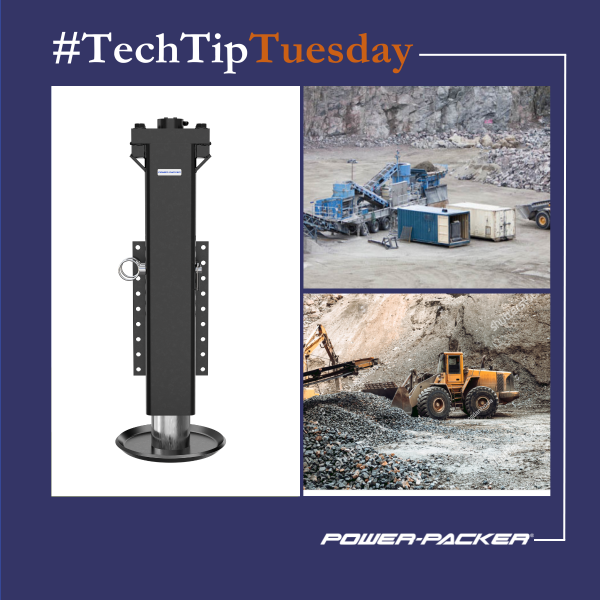
Stabilizing mobile aggregate equipment for operation or maintenance has long been done using box cribbing to prevent shifting or collapse. However, choosing hydraulic stabilization legs, with counterbalance valves, swivel shoes and mechanical locking pins, provides a more secure structure that is highly engineered, stable and efficient.
Below is a closer look at differences between the two stabilization systems:
Box cribbing
Cribbing has certain limitations and risks:
Labor and ergonomics
- Manual set-up: Box cribbing involves a manual set-up process, making it more labor intensive, and it involves an ergonomic risk to operators.
- Time requirements: Assembling, disassembling and maintaining box cribbing takes time, which expands the deployment process and increases job downtime.
Materials
- Durability: Common cribbing materials include wood and plastic, but wood is susceptible to decay and insect and moisture damage, and plastic can become brittle in cold environments.
Stability
- Ground conditions: Box cribbing must be placed on a firm, level surface free of debris, because soft or uneven terrain causes set-up inconsistencies.
- Maintenance: Routine cribbing inspection is necessary to prevent settling, cracking or slipping of materials.
Hydraulic stabilization legs
In comparison, using stabilization legs to support heavy machinery, like rock crushers, conveyors, loaders and excavators, is a better choice based on a number of factors:
Efficiency
- Rapid deployment: Stabilization legs can be extended or retracted quickly with minimal labor.
- Remote operation: Easily accessible, operators simply deploy the legs by pressing a button, which improves safety
Stability
- Overall design: Hydraulic stabilization legs are specifically engineered to optimize stability and consistent load distribution.
- Mechanical locking pins: Backing up to the hydraulic system, mechanical locking pins improve safety and reliability. Once equipment is raised to operating height, heavy-duty pins, constructed to support forces equivalent to the lift capacity, lock in place to keep equipment secure for the duration of the project.
- Swivel shoes: Uneven work site terrain? Swivel shoes, moving in all directions and available in multiple sizes, increase surface area contact. This reduces ground pressure and deformation, and eliminates the need for additional ground preparation or leveling.
Budget
- Stabilization legs minimize time and materials.
Feature comparison: Box cribbing vs. Hydraulic stabilization legs
| Box cribbing | Hydraulic stabilization legs | |
| Set-up time | High | Low |
| Labor requirement | Manual | Minimal |
| Terrain adaptability | Limited | High |
| Safety features | Passive | Active |
| Load distribution | Variable | Consistent |
| Material durability | Variable | High |
| Cost over time | Moderate to high | Higher upfront, then maintenance only |
Box cribbing remains a viable method for stabilizing mobile aggregate equipment; however, labor, safety and terrain adaptability limitations make cribbing less ideal compared to hydraulic stabilization legs. To learn more about how to integrate Power-Packer stabilization systems into your aggregate equipment, please contact us.
Power-Packer is one of CentroMotion’s seven global brands offering solutions that maximize the safety, reliability and productivity of equipment used in transportation, agriculture, construction, mining and other industrial environments. For more than 50 years, Power-Packer has helped customers achieve their goals, primarily within the industrial and transportation markets. If you are located outside of North America, please contact our global team for more information on available products and solutions in your area.